
Unless you have a truly innovative, industry-changing product, the marketplace is crowded (the marketplace will eventually catch up to that innovative product, too). That’s why positioning can make or break your business. It’s not about being everything to everyone; it’s about being a great fit for a narrow market subset. It’s about context setting. David C. Baker outlines in The Business of Expertise that positioning occurs horizontally and vertically (April Dunford’s book OBV!OUSLY AWESOME is a great resource too). Here’s a simplistic overview:
- Horizontal positioning refers to broad context, or for this article, skills/expertise —think of it as the “what” or “how” you do something.
- Vertical positioning zeroes in on a deep understanding of a niche or audience—the “who” you do something for.
To make waves, blending the two creates a powerful message that sets you apart from the competition. It’s about defining what you do, who you do it for, and why you’re the best choice.
I’ll be the first to admit that getting the right positioning can be challenging and takes time. It’s hard to be brave enough to narrow your current audience. Most people want to target the masses, which leads to wasted marketing spending and sales efforts. What sets the winners apart is figuring out what they are good at and who exactly their product or service is for. Below is an outline to help you better understand your business, competitors, and market position. When going through process with the team, make sure there are stakeholders from all aspects of the business.
So, what sets you apart from the competition? Let’s dive in.
Step 1: Assess Your Current Position
Before you conquer your niche, you need to know where you stand. It’s time for some introspection.
Develop Your Internal Messaging Platform
Start by developing a comprehensive internal messaging platform. I recommend this for anyone, not just those going through determining their positioning. This powerful process helps your team align on what you do, how you do it, who you do it for, and how you speak to your audience leading to greater marketing efficiency. This isn’t just a formality—it’s your north star. Include the following:
- Internal Positioning: Succinctly describe your company’s unique value.
- Corporate Overview: A snapshot of who you are and what you stand for.
- Brand Archetype: The personality and voice of your brand.
- Service Offerings: A list of the products or services you offer.
- Ideal Customer Profiles (ICPs): Detail your target audience’s personas and pain points.
- Customer Journey: I usually build this into the ICPs but outline the customer buyer journey and different pain points at different stages.
- Unique Value Propositions: This sets your offerings apart and how it helps your ICPs’ pain points.
- Data-Driven Proof Points: Hard evidence that supports your claims.
This simple framework is a foundational process for assessing your current position and identifying gaps you have. Don’t know your ICPs or have a Corporate Overview? I bet you do, but it’s locked away in your mind. Time to get that out into documentation that will help your entire team. Now is the time to put this together to tell a complete marketing story.
This is great time to perform customer interviews. I suggest targeting your evangelicals and getting an understanding on why they chose you in the first place, what they love about your product, and what keeps them around. Having and using their exact words will be immensely helpful when you craft your positioning. It will also shed light on patterns you might see in customer category, industry, size…etc. that you can target in the future.
Even if you aren’t adjusting or creating your market positioning, this is a great practice for any business to undertake and reassess twice a year as the market and offering/s fluctuate.
Step 2: Compile Competitive Intel
Knowledge is power—in this case, it’s the power to position yourself where others aren’t. Now that’s you’ve put in the work on where you currently stand, let’s dive into the competitors (this process assumes you know 5+ competitors; if not, time to do a little research or speak to your sales team).
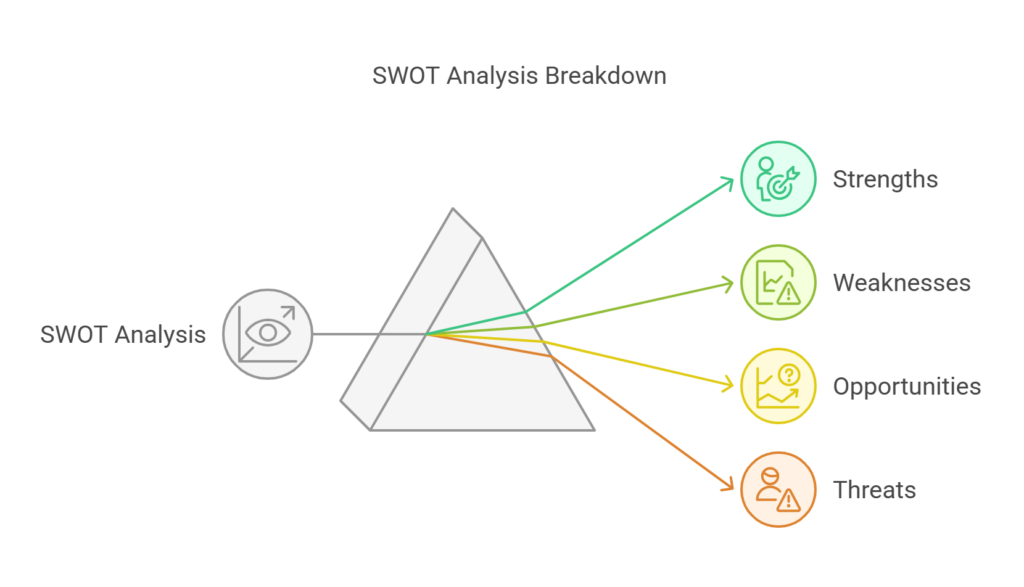
Perform a SWOT Analysis
For each major competitor, analyze their:
- Strengths: What are they doing well?
- Weaknesses: Where are they falling short?
- Opportunities: What market needs aren’t they addressing?
- Threats: How could they potentially hinder your growth?
Dig Deeper:
- Messaging Ownership: What key messages are they broadcasting?
- Taglines and Slogans: How are they summarizing their value?
- Market Dominance: Which segments, service modalities, product features, or niches do they control?
- Patient Centricity: Can you find any numbers on their customer satisfaction? Any public NPS scores? This is also a good reminder to track and improve your NPS scores over time.
- Gaps in the Market: Where are the unclaimed territories?
Your competitors are watching you and evolving to find their market positioning. Be sure to track any new strategies or products they introduce continually.
Find Land to Claim
This is your golden opportunity. Look for areas of value where competitors are silent or lack strength. For example:
- If they emphasize low prices, you can focus on premium quality.
- If they promote customer service, you can focus on 100% satisfaction guarantees.
- If they push innovation, you might position yourself as the trusted authority with decades of experience.
Here’s an example. Say you own a tree-trimming service. From compiling intel, you notice that most of your competitors do tree-trimming, landscaping, and hardscaping. You could position your company as the “only tree service experts in the [insert location] solely dedicated to safe, plant-friendly tree services.” Think of it from a prospect’s point of view. Why would they risk damaging their trees or having limbs fall on their house to the competitors who might have just finished pouring a concrete patio hours earlier? They need a trusted partner who does this daily and is backed by [insert years] of experience. It’s a no-brainer.
Own that space boldly. Finding and internalizing that in the company is not enough—you must confidently claim it.
Step 3: Every Word in Your Positioning Statement Matters
Your market positioning statement is not the place for fluff. It’s a tool designed to cut through the marketplace noise.
Craft a Powerful Positioning Statement
For Consumer Brands:
- Emphasize Exceptional Customer Service: “We’re the only [insert service or niche] that offers 24/7 support. We are there when you need us, at anytime.”
- Highlight Exclusive Ingredients: “Made with a proprietary blend of gluten-free, organic ingredients you won’t find anywhere else.”
- Unbeatable Guarantees: “Satisfaction guaranteed, or your money back—no BS, no questions asked.”
For B2B Brands:
- Proprietary Methods: “Our patented process delivers results 50% faster for [insert industry].”
- Industry-First Technology: “We utilize cutting-edge AI technology that’s transforming the [insert industry] by [insert how].”
- Unmatched Expertise: “As the only provider dedicated to [insert industry], our team has over 100 years of unmatched experience.”
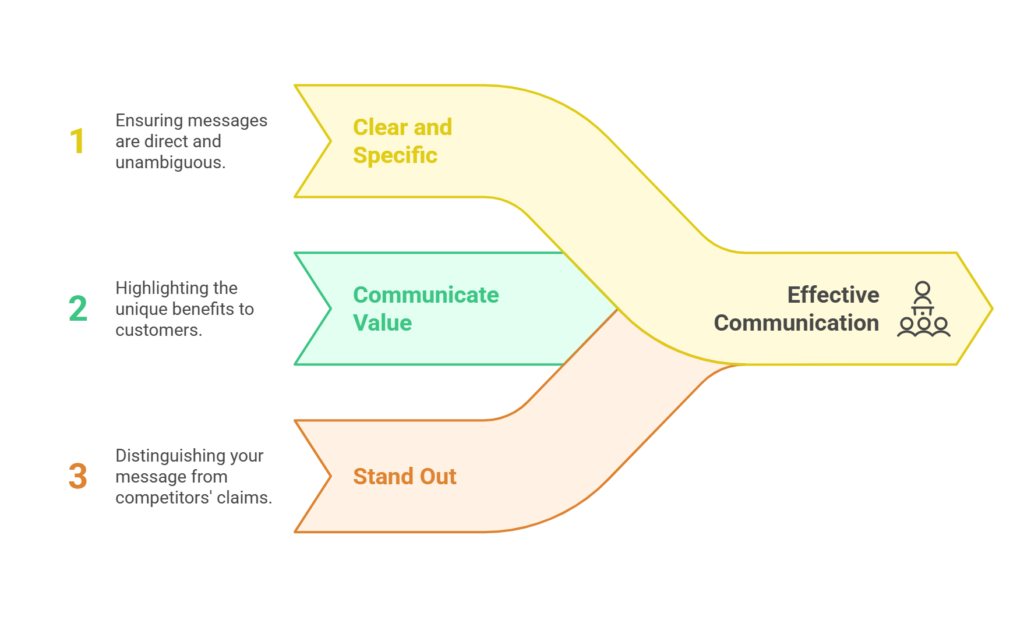
Remember:
- Be Clear and Specific: Avoid diluting your message with fluff.
- Communicate Value: Focus on the benefits you provide to your customers.
- Stand Out: Make sure it’s something your competitors can’t claim.
These are just starter examples. Make them your own with the industry knowledge you possess.
Step 4: Test and Validate
Assumptions are risky, but data isn’t. Before you roll out your new positioning, I recommend testing it internally (note: you should create your positioning with a larger team of stakeholders) and externally. Once you’re happy with it, you can use the resources to update your website and collateral. Apart from getting internal feedback, this is a lower-cost method I’ve employed.
Run Messaging Tests with Your Ideal Audience
Use Targeted Methods Like LinkedIn Ads:
- Target Your Audience: Based on your earlier work building your messaging platform, create a highly targeted ICP audience on LinkedIn.
- Create Multiple Ad Variations:
- Each with a different positioning statement (if you have slight variations) vs your current positioning.
- Keep Imagery Consistent:
- This ensures you’re testing the message, not the visuals.
- Measure Performance Metrics:
- Click-through rates, engagement, conversions.
Analyze the Data:
- Which message resonated the most?
- Did one version lead to more inquiries, sign-ups, or a higher click-through rate (CTR)?
- What feedback did you receive?
Refine Accordingly:
- Use the insights to tweak your positioning statement.
- This iterative process hones your message (as long as you can back up your claims).
This is just one method to test your proposed market positioning. There are several other testing methods, but that is beyond the scope of this article.
Step 5: Own Your Positioning
You’ve done the groundwork—now it’s time to claim your space.
Integrate Your Positioning Across All Channels
- Website: Update your homepage, about page, and services descriptions.
- Marketing Materials: Reflect your new positioning in brochures, emails, and social media profiles.
- Sales Messaging: Ensure your sales team articulates the same core message.
- A cohesive message builds trust and recognition.
- Repetition reinforces your position in the minds of your audience.
Proclaim It with Confidence
- Be Unapologetic: Stand firm in your differentiation, knowing you can back up any claim you have made.
- Inspire Your Team: Ensure everyone in your organization embodies the new positioning.
- Communicate Value Relentlessly: Keep highlighting why you are the best choice.
Conclusion: Niche and Thrive
Market positioning isn’t a one-time task—it’s a strategy that requires attention/review (every 6-12 months – it could be a part of one of your monthly marketing planning sessions) and adaptation. Because it can help shape and change a company’s direction, I would only drastically shifting your positioning as your place in the marketplace shifts (or the marketplace itself drastically changes). That said, failure to adapt when market conditions change, or ignoring customer feedback can be a death sentence for a company; remain vigilant. By taking a strategic, data-driven approach, you differentiate your brand and connect more deeply with the right audience.
Remember:
- Assess where you are – category, market, ideal customer.
- Analyze the competition and find value gaps
- Craft every word of your positioning with intention.
- Test, validate, and refine your message.
- Own your space with confidence.
Developing and optimizing your market positioning will attract those who value what only you can offer, propelling your business toward attainable growth.
Are you ready to stand out, be bold, and tell the market exactly why you’re the best choice?